
The myth: “Push harder, finish strong.”
The reality: Q4 wins often plant Q1 burnouts.
The fix: Treat year-end urgency like technical debt—track it, refactor it, and stop borrowing from January.
Christmas Eve. I closed a $50M deal.
My team celebrated with champagne. My CEO called me a star. My bonus hit six figures. From the outside, it looked like triumph.
On January 3rd, I couldn’t get out of bed.
Not sick. Not lazy. Just... empty. I stared at my laptop for 20 minutes, couldn’t remember my email password, and realized I didn’t care. The win I’d sacrificed three months for? It felt like someone else’s victory.
My wife asked what was wrong. I had no answer. The adrenaline that carried me through December evaporated, and what was left? Nothing.
That’s when I learned: December wins can seed January surrenders.
I lived this collapse three years in a row before I realized: this wasn’t about toughing it out. It was about debugging a broken system.
Every Q4, the same pattern emerges across tech companies:
October: “Let’s finish strong this year!”
November: Calendar fills with “critical” year-end pushes
December: You’re running on coffee and cortisol
January: You can barely remember why you cared
The trap has three components:
Your boss’s Q4 goals become your late nights. Your company’s fiscal calendar becomes your personal crisis. The deadline isn’t even yours, but your body doesn’t know that.
I once worked 14-hour days for six weeks to meet a year-end metric that, I later learned, didn’t impact my review, bonus, or career trajectory. It was just a number on someone else’s dashboard.
You feel productive. You’re checking boxes, clearing projects, and landing wins. The dopamine hits keep coming.
But here’s what I missed: I hadn’t seen my kids awake in two weeks. I’d canceled golf four Thursdays in a row. My rental property renovation stalled because I had “no bandwidth.”
The adrenaline convinced me I was winning. The calendar showed I was losing.
Instead of a fresh start, Q1 becomes damage control:
Energy depleted
Motivation gone
Relationships strained
Side projects abandoned
You start the year in the red, spending months just getting back to zero.
As engineers, we understand the concept of technical debt: shipping quick fixes that accumulate interest over time.
Q4 sprint culture creates the same thing—energy debt.
Every “just push harder” moment borrows from January to pay December’s deadline. Every “one more late night” compounds. Every “I’ll rest after this launches” accrues interest.
The interest rate? Your health, your relationships, your freedom, and eventually—your ability to do the work at all.
After my third January collapse, I started treating energy like I treat system resources: finite, trackable, and requiring deliberate allocation.
Here’s what I do now to break the lock-in trap. These aren’t motivational fluff—they’re engineering solutions to a systems problem.
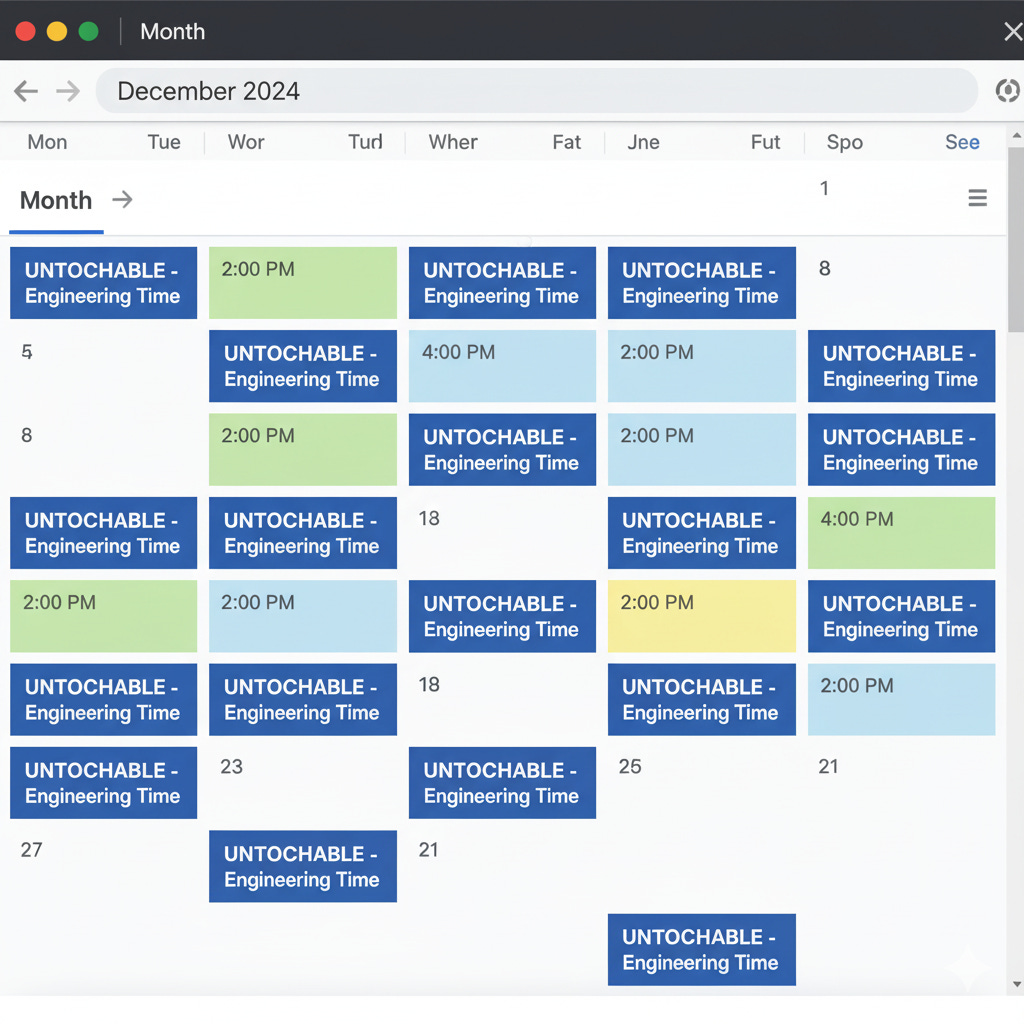
What it is: I block 2-4 PM every day as untouchable time.
The rules:
No meetings. Ever.
No Slack. Phone on Do Not Disturb.
Sometimes deep work. Sometimes literally nothing.
Why it works: This isn’t downtime. It’s margin. The buffer that prevents December chaos from cascading into January burnout.
Real result: Last December, when my team had three simultaneous crises, I still protected my buffer blocks. We solved everything anyway. The world didn’t end. And I started January clear-headed instead of catastrophizing.
Your action: Block 2 PM - 4 PM today for the next 30 days. Label it “Engineering Time” if you need corporate camouflage. Defend it like production uptime.
What it is: Instead of one massive Q4 “final push,” I run 10 days on, 4 days reset.
The process:
Days 1-10: Full focus, no meetings about meetings
Days 11-14: Audit everything, delete the stupid, refactor what’s broken
Real result: In one reset period, I cut 11 recurring meetings. That gave me back 8 hours per week—permanently. I didn’t ask permission. I stopped attending and waited to see who would notice. (Spoiler: nobody did.)
Your action: Schedule your next reset days RIGHT NOW. December 16-19? Perfect. Use them to delete, delegate, and decompress before the holidays.
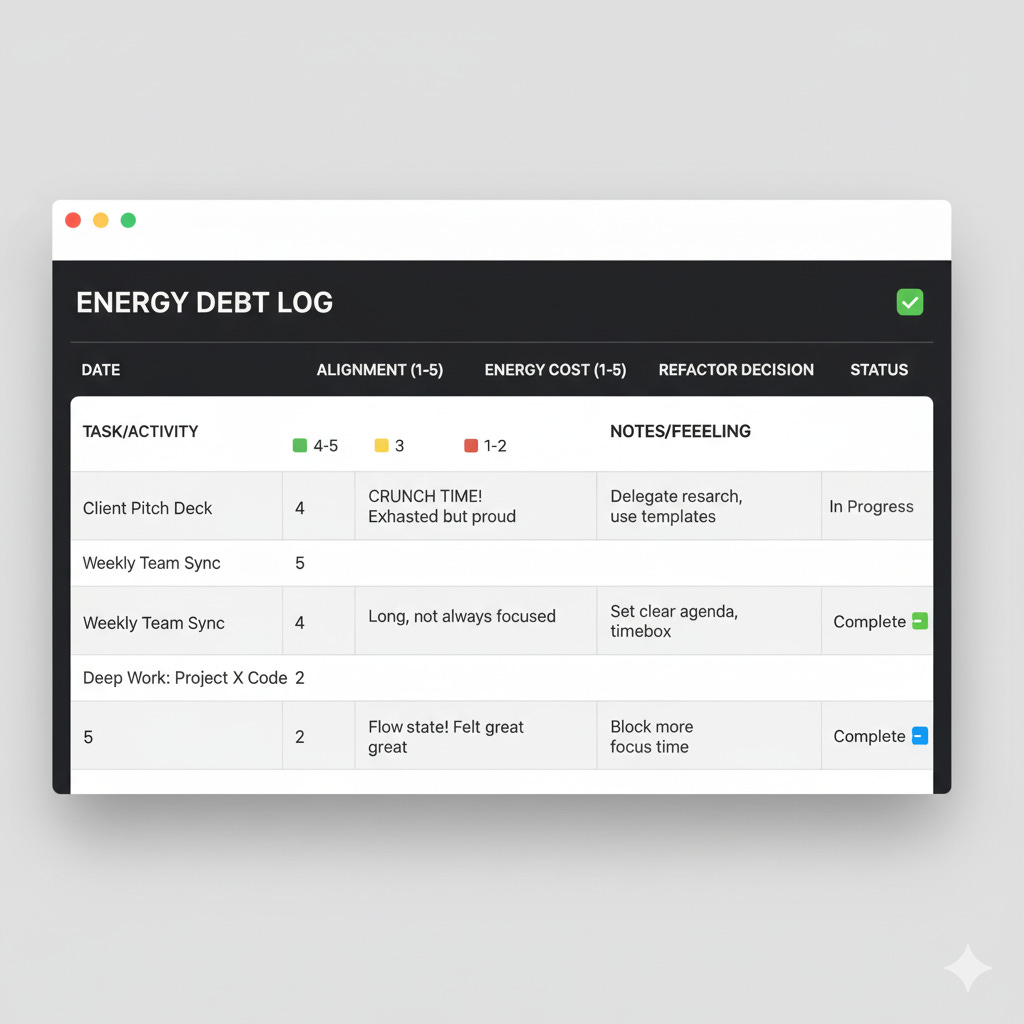
What it is: Like Jira tickets, I log every time I say yes to urgency that isn’t aligned with my goals.
My template:
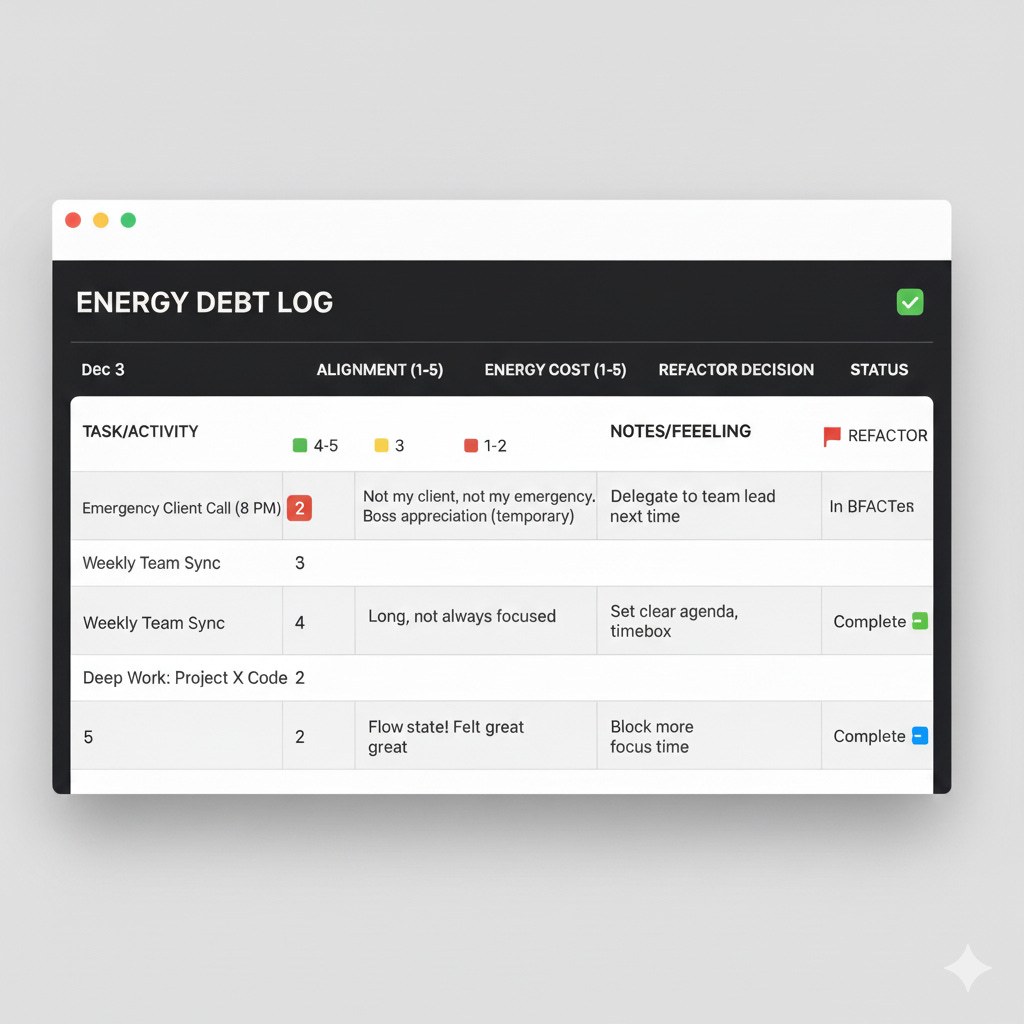
The rule: At the end of each week, I refactor—deleting at least one energy debt item from next week’s calendar.
Real result: That single deletion each week keeps my January from becoming someone else’s backlog. Over 12 weeks (Q4), that’s 12 regained commitments—roughly 30-40 hours of life back.
Your action: Start your energy debt log today. Just use a Google Doc. Log the next three times you say yes to someone else’s urgency. End of the week, delete one from next week.
What it is: Every Friday at 4 PM, I ask three questions:
What recharged me this week? (Do more of this)
What drained me? (Eliminate or delegate)
Am I sprinting toward my values or someone else’s metrics?
Real result: This audit revealed I was spending 60% of my time on work that paid well but drained me completely. Within three months, I restructured my consulting practice, raised my rates, and cut my client load by 40%. Revenue stayed flat. Energy doubled.
Your action: Block 30 minutes this Friday at 4 PM. Answer those three questions honestly. Then make ONE change based on what you discover.
Real client story: One engineering manager deleted his “mandatory” Friday status meetings after running this audit. His director never noticed. He’s played golf every Friday for the past eight months.
Since implementing these four systems three years ago:
Energy metrics:
0 January burnouts (vs. 3 straight years before)
Thursday golf streak: 47 consecutive weeks
Vacation days actually taken: 100% (vs. 40% forfeited before)
Work metrics:
40% fewer working hours (60/week → 35/week average)
Revenue: Flat first year, +25% second year, +40% third year
Client satisfaction: Up 35% (turns out rested consultants are better consultants)
Life metrics:
Dinner with family: 6 nights/week (vs. 2 before)
Side projects launched: 3 (rental properties, coaching practice, newsletter)
Stress level (self-reported 1-10): Dropped from 8-9 to 3-4
The irony? I make more money working less because I only take on projects that energize me, rather than draining me. When you stop saying yes to everything, you have space to say yes to the right things.
The systems work. But only if you actually implement them.

□ Do you feel more pressure than purpose this December?
□ Is your January already overbooked before it starts?
□ Are you sprinting on adrenaline instead of alignment?
□ Do you dread January even though you’re “winning” December?
If you checked 2+: You’re not sprinting—you’re spiraling.
Lock-in season tricks you into thinking you’re indispensable.
But here’s the truth I learned after three January collapses: No bonus, project, or year-end number is worth starting the next quarter in energy bankruptcy.
So ask yourself:
Am I building freedom systems?
Or am I planting burnout seeds?
Because sustainable success isn’t about closing the year strong. It’s about starting the next one free.
Audit your December calendar right now. For every commitment, ask:
“Is this my goal, or someone else’s urgency?”
Then delete one thing. Just one.
It could be:
A recurring meeting you’ve been tolerating
A “networking” event that drains you
A project you said yes to out of guilt
An obligation that serves no one
Please reply and let me know what you cut. I’m collecting “permission to say no” stories, and I read every single one.
The engineers who build the most valuable systems aren’t the ones who say yes to everything. They’re the ones who ruthlessly prioritize what matters.
Here’s to debugging your December before it burns your January. 🚀
P.S. If you’re trapped in the lock-in season grind, you’re not alone. Every Monday in the Monday Liberation Newsletter, we debug the systems that keep high-performers stuck—and build the ones that set them free.
Join 2,000+ tech professionals who are treating their careers like the engineered systems they deserve to be.
New subscribers get:
The Energy Debt Tracker template (the same system that reclaimed 30+ hours in my Q4)
Following Monday’s topic: “The 4-Hour Workweek Was Wrong: Why Tim Ferriss’ Framework Breaks for Tech Leaders (And What Works Instead)”
⏰ Only 3 Mondays left in 2025 to debug your systems before the new year. Don’t start January in energy bankruptcy.
P.P.S. Still think you need to push through December? Take the 5-minute Corporate Liberation Assessment and see if you’re optimizing for freedom or just surviving the grind: https://tally.so/r/nr41LX
You’ll get a personalized breakdown of your energy debt, alignment gaps, and the exact systems to implement first.
#CareerFreedom #SystemsThinking #EngineeringLeadership #Burnout #WorkplaceGenie